

KU Leuven PhD in Business Administration
Hosted at LSB
This program is for accomplished professionals who want to advance the frontiers of their field without stepping away from the work that put them there. So they can speak and lead not from experience alone, but with genuine intellectual authority.

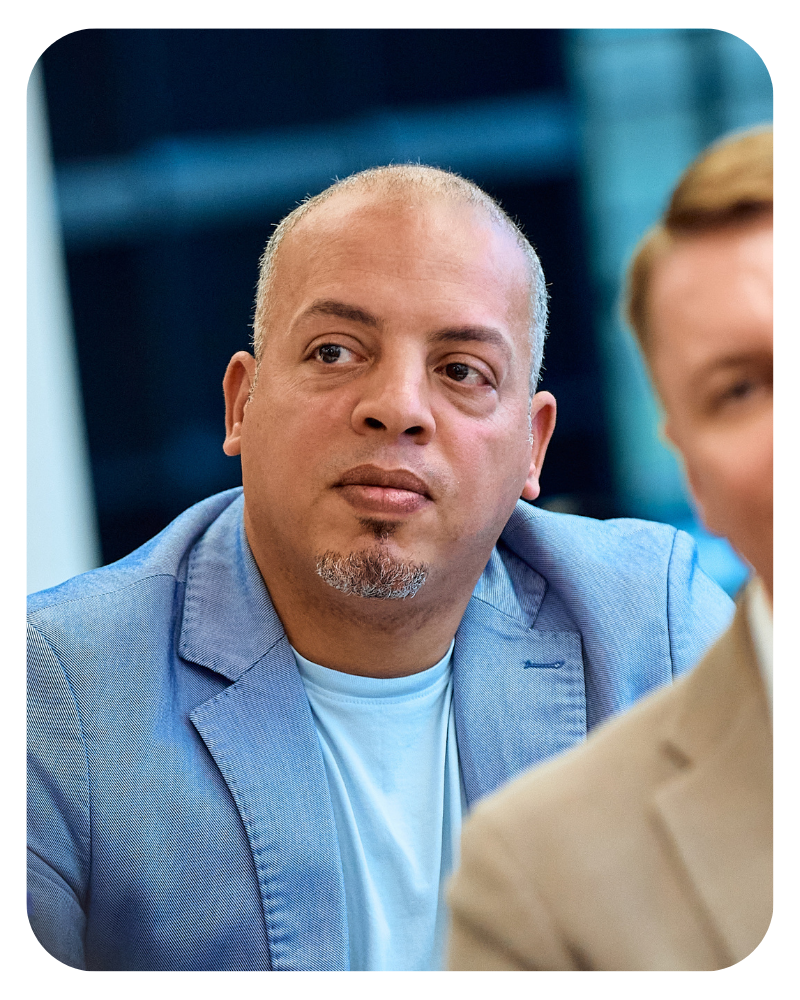
Rigour and relevance
Academic depth connected to real-world professional impact.
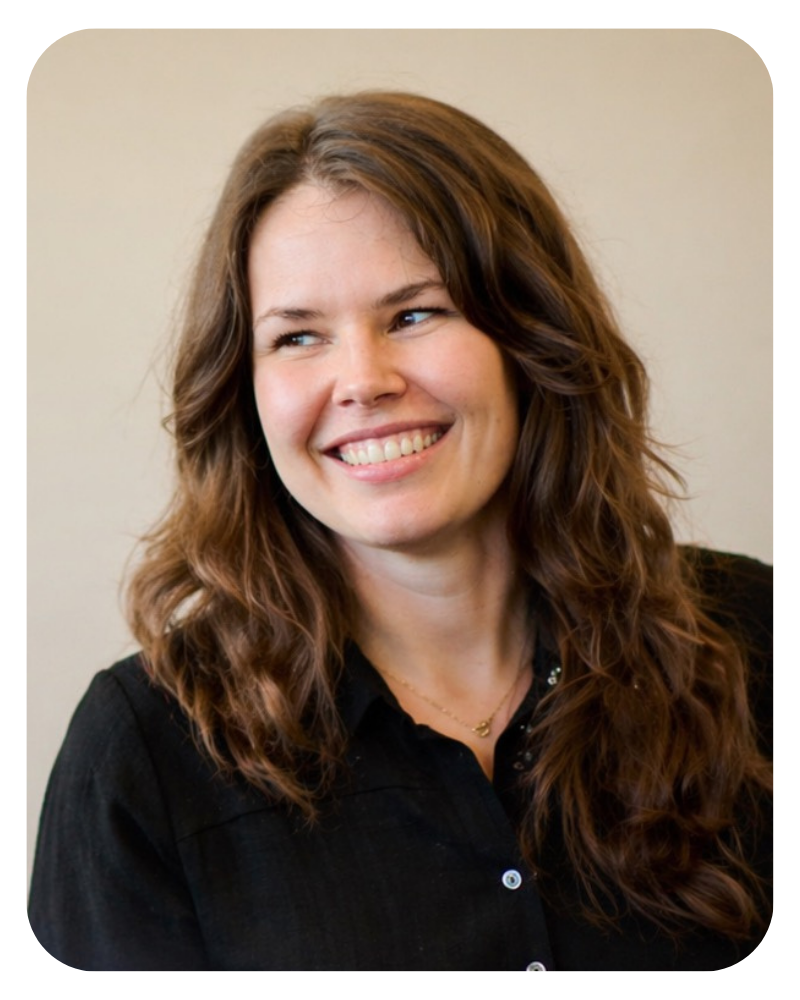
Research meets the real economy
Hosted at LSB, guided by KU Leuven’s scholarly authority.
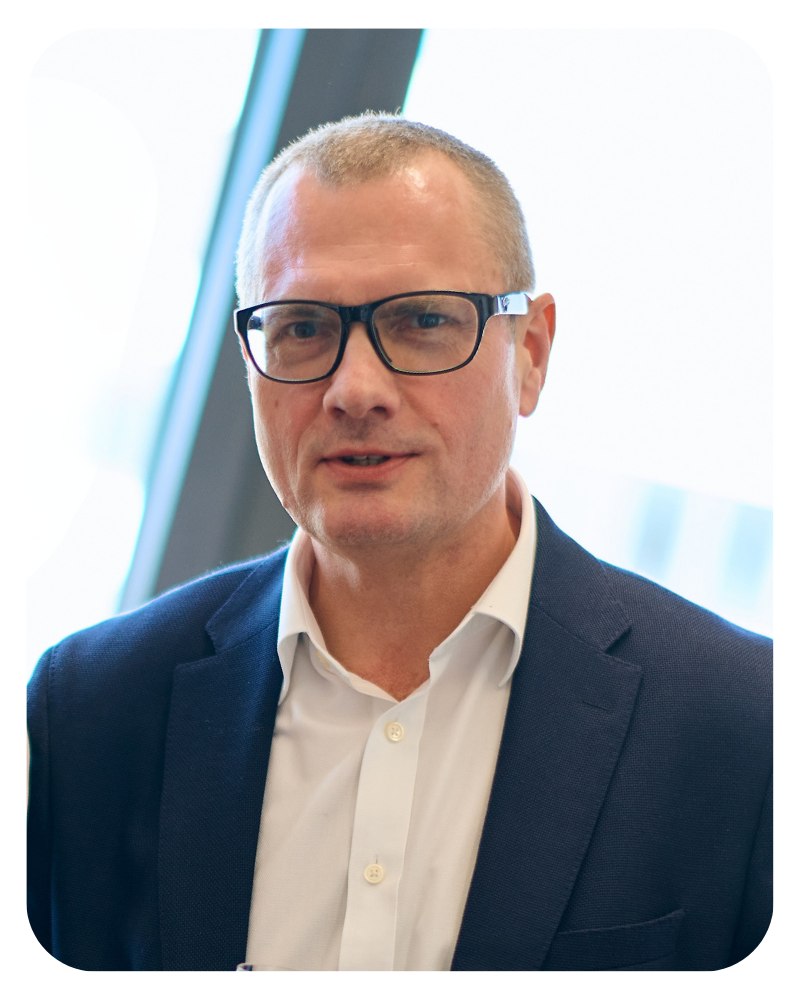
A richer supervision model
A KU Leuven promotor, LSB co-supervisor, and non-academic mentor support the candidate.

Insights for impact
Original research that moves between academia, business, policy, and practice.
There comes a point in a career when experience has taught you everything except how to prove it — and the convincing arguments you’re reaching for call for more than expertise alone. The LSB–KU Leuven Executive PhD in Business Administration is built for exactly that moment: accomplished professionals who want to advance the frontiers of their field without stepping away from the work that put them there — so they can speak and lead eloquently, not from experience alone, but with genuine intellectual authority.
You pursue your doctorate alongside your current role, under the scholarly authority of KU Leuven — one of Europe’s leading research universities — while being hosted and guided by experts from LSB’s international network, so that your research meets the real economy. Selected opportunities may also arise to pursue the doctorate as continuing education on a full-time basis. Where a candidate is funded through a research-training grant, hosting at LSB is foreseen under the Luxembourg law of 19 August 2008 relative aux aides à la formation-recherche. In every case the degree is conferred by KU Leuven under its own degree-granting authority — a fully recognised and accredited doctorate — with LSB’s role as host and co-supervising institution documented in the accompanying diploma supplement (Europass Diploma Supplement).
Rigour and relevance — without the trade-off.
Most executive doctorates ask you to choose between academic depth and professional impact. Ours is built to refuse that choice. Your research is rooted in the financial, institutional, and organisational settings where the questions that matter actually arise — and held to the standards of one of Europe’s foremost research universities.
What you walk away with: i4i.
Over roughly four years, in an article-based format, your research culminates in four articles of publishable quality, defended publicly before a jury. You emerge able to move with confidence between academia, business, policy, and practice — turning original insight into real impact, for your organisation and for society.
That’s what we mean at LSB by i4i-insights for impact.
Our model is designed as a comprehensive doctoral learning and development framework. It supports academic excellence while also preparing candidates for a wider range of professional futures. The doctoral candidate stands at the centre of this model as an active steward of both their research and career developments. Ownership, autonomy, and responsibility are treated as core elements of the doctoral journey.
The program is built around three broad learning outcomes, in line with the European Qualifications Framework for Lifelong Learning: developing cognition, developing research and advanced skills, and developing personal resourcefulness:
Developing cognition
Candidates acquire knowledge at the most advanced frontier of a field and at the interface between fields, with a clear focus on societal pertinence and applied relevance.
Developing research and advanced skills
Candidates master specialized methods, analytical tools, and research techniques. They learn to solve complex applied research problems, extend knowledge, and refine professional practice.
Developing personal resourcefulness
Candidates grow in autonomy, integrity, authority, and innovation. They develop the capacity to exercise independent judgement and to contribute new ideas and processes at the frontier of research and practice.
Because doctoral learning cannot be reduced to a single pathway, the program combines several forms of development within one coherent trajectory. It includes transferable skills training in areas such as research ethics and integrity, unconscious bias in research and the workplace, open science and innovation, research methods, broader professional skills linked to career goals, and, where relevant, entrepreneurship.
It also combines formal and informal learning formats. These include joint formal training to foster community and cohort development, selected workshops and courses, and informal learning through mentoring, reflection, discussion, and professional exposure.
Each candidate develops not only a research plan, but also an individualised development plan. This allows the learning process to be tailored to the candidate’s profile, ambitions, and evolving needs. The doctorate is therefore understood not only as the production of a thesis, but also as a structured process of intellectual and professional formation.
A richer supervision model
In the LSB–KU Leuven model, the relationship between supervisor and doctoral candidate is central both to research quality and employability, as well as to the candidate’s wellbeing.
The KU Leuven promotor acts as the academic director of the thesis, in close coordination with the LSB-nominated co-supervisor. Together, they ensure scholarly quality, direction, and coherence.
LSB also adds a broader developmental dimension through the inclusion of a non-academic mentor. This person, who also holds a PhD, brings professional perspective and supports career development, training choices, impact orientation, public engagement, and, where relevant, questions related to wellbeing and future direction.
This creates a richer supervision ecosystem built around four actors: the KU Leuven promotor, the LSB-linked co-supervisor from the LSB international academic network, the non-academic mentor or practitioner, and the doctoral candidate as active owner of the trajectory.
Four minds behind every thesis.
You won’t work with a single supervisor. A team works in concert: a KU Leuven promotor who directs the academic thesis, an LSB co-supervisor drawn from our global network of top-tier scholars, and a non-academic mentor — a fellow PhD holder — who keeps your work connected to real-world impact. At the centre is you, the owner of your trajectory, with an individualised development plan that treats the doctorate as professional formation, not merely the production of a thesis.
This doctoral program offers the best of both worlds: the academic excellence and international scholarly credibility of KU Leuven, together with the international business environment, strategic focus, and real-world connectivity of Luxembourg School of Business.
A central source of its value lies in a scholar-practitioner approach that remains uncommon within research-oriented PhD structures. Doctoral research is not pursued in isolation from practice, but in close engagement with the environments in which serious problems emerge and where original work can make a meaningful difference.
Positioned as a premium scholar-practitioner platform, the program is especially well suited to responsible leaders who wish to develop disciplined thinking, produce structured evidence-based diagnoses, and help design feasible solutions to the challenges that arise when business models shift, financial systems evolve, governance is reconsidered, and institutions need to adapt.
Each candidate benefits from a dual-supervision model, with one promotor from KU Leuven and one leading academic drawn from LSB’s global network of top-tier scholars, complemented where appropriate by international exchanges. As host institution, LSB also provides close guidance throughout the doctoral journey, helping candidates sustain focus, motivation, and perseverance.
The trajectory is expected to be completed within four years and, in an article-based format, would typically lead to four coherent articles of publishable quality in the relevant field, to be publicly defended before a jury.
The doctorate is demanding by design, while recognising that doctoral pathways may, in some cases, evolve due to unforeseen circumstances. Where a candidate leaves the PhD trajectory before completion, the program seeks to preserve academic continuity. Subject to academic review, ECTS credits successfully obtained under the doctoral program may be consolidated toward an LSB Postgraduate Certificate in Advanced Research in Management and Innovation.
The result is a doctoral experience that combines academic rigour with real-world relevance and is uniquely positioned at the intersection of impactful scholarship and innovative practice.
We wish our doctoral candidates every success as they embark on this demanding and rewarding journey — ad maiora!
At the Luxembourg School of Business, we are building a doctoral environment that responds to the changing realities of higher education, research, and professional life. Across Europe, doctoral education has evolved beyond its traditional role as preparation for a career in academia alone. The slower expansion of permanent academic positions, combined with growing demand for advanced knowledge professionals outside universities, has made it necessary to rethink what doctoral learning should prepare candidates for. Yet the doctorate also remains rooted in something deeper: the enduring curiosity and intellectual ambition of individuals who seek to advance to the highest level of formal learning and to contribute original knowledge.
Seen in this light, the doctorate forms part of a broader lifelong learning journey. It may mark the continuation of an academic vocation, but it may equally reflect a desire for intellectual renewal, deeper specialisation, or a new stage in professional development. Doctoral education today therefore stands at the crossroads of research, education, innovation, and career development. It is not only about preparing future academics. It is also about shaping highly skilled knowledge professionals who can generate original insight, exercise sound judgement, and create value in complex organisational and institutional settings.
The LSB–KU Leuven PhD model is designed for a world in which doctoral education must do more than reproduce traditional academic pathways. It must continue to safeguard research quality and scholarly standards, while also helping candidates grow into original thinkers, responsible professionals, and effective contributors to society.
The program therefore brings together academic rigour, strategic relevance, international exposure, and developmental support within one coherent framework. It is designed for candidates who want to produce research of high quality while remaining closely connected to the organisational, financial, and institutional environments in which important questions emerge and where new knowledge can have genuine impact.
The LSB–KU Leuven Executive PhD in Business Administration is open to candidates who meet KU Leuven’s doctoral admission and enrolment requirements and who can lawfully participate in the program under the applicable immigration and residence rules of Luxembourg, Belgium and the Schengen Area.
Admission to the academic program does not replace any visa, residence, work, hosting-agreement, declaration-of-arrival, municipal-registration, or other administrative requirement.
1. Initial conversation
Talk to our Dean
2. Research direction
The applicant identifies a proposed research direction.
3. KU Leuven promotor
The applicant only needs to identify (suggest) a proposed KU Leuven promotor.
4. LSB nomination
LSB will search and nominate a suitable co-promoter and non-academic mentor which will be identified at application stage.
5. Admission and enrolment
The LSB–KU Leuven Executive PhD in Business Administration is open to candidates who meet KU Leuven’s doctoral admission and enrolment requirements and who can lawfully participate in the program under the applicable immigration and residence rules of Luxembourg, Belgium and the Schengen Area.
Degree conferral
Pursuant to the law of 21 July 2023 on higher education in Luxembourg, accredited specialised higher education institutions may be accredited to offer programs leading to Bachelor’s and Master’s degrees, but cannot autonomously confer a doctoral title — that prerogative being exclusively reserved for the public University of Luxembourg. Nevertheless, specialised higher education institutions may partner with institutions that hold doctoral conferral rights to offer a joint doctoral programs.
You pursue your doctorate alongside your current role, under the scholarly authority of KU Leuven — one of Europe’s leading research universities — while being hosted and guided by experts from LSB’s international network, so that your research meets the real economy. Selected opportunities may also arise to pursue the doctorate as continuing education on a full-time basis. Where a candidate is funded through a research-training grant, hosting at LSB is foreseen under the Luxembourg law of 19 August 2008 relative aux aides à la formation-recherche. In every case the degree is conferred by KU Leuven under its own degree-granting authority — a fully recognised and accredited doctorate — with LSB’s role as host and co-supervising institution documented in the accompanying diploma supplement (Europass Diploma Supplement).
Immigration and residence notice
The LSB–KU Leuven Executive PhD in Business Administration is open to candidates who meet KU Leuven’s doctoral admission and enrolment requirements and who can lawfully participate in the program under the applicable immigration and residence rules of Luxembourg, Belgium and the Schengen Area.
Admission to the academic program does not replace any visa, residence, work, hosting-agreement, declaration-of-arrival, municipal-registration, or other administrative requirement.
Important notice
Immigration status is assessed individually and may depend on nationality, place of residence, duration and frequency of stays, source of funding, employment status, hosting arrangements and the country in which the candidate is physically present.
Candidates are responsible for obtaining the required visa or residence authorisation before commencing any stay in Luxembourg or Belgium. LSB and KU Leuven may provide institutional documentation where appropriate, but admission to the program does not guarantee the grant of a visa, residence permit, work authorisation, or researcher status.
Citizens of the European Union, the European Economic Area and Switzerland may participate subject to KU Leuven’s admission and enrolment requirements and the ordinary registration formalities applicable in Luxembourg and/or Belgium where their stay exceeds the relevant residence-registration thresholds.
Candidates who are not EU/EEA/Swiss citizens but already hold a valid residence status in an EU Member State may be eligible to participate, subject to the conditions attached to their existing residence status and, where applicable, the mobility rules for students or researchers.
Where the candidate conducts part of the doctoral research in Luxembourg or Belgium, the relevant national immigration procedures must be complied with before the stay begins.
Candidates who need to reside in Belgium for more than 90 days in connection with their KU Leuven doctoral enrolment will normally need to obtain the appropriate Belgian long-stay visa and residence authorisation. KU Leuven states that students, including doctoral scholarship holders, must generally apply for a long-stay type D visa at the competent Belgian consular post when their stay exceeds 90 days.
Candidates who need to reside in Luxembourg for more than three months in connection with research activities hosted at LSB must obtain the appropriate Luxembourg authorisation to stay and residence permit. Luxembourg law provides that a third-country national may stay for more than three months only if he or she holds the relevant authorisation, including as a student or researcher. Guichet.lu further states that third-country nationals coming to Luxembourg for more than three months for study must apply for an authorisation to stay and then a residence permit, and that researchers enrolled in PhD programs are considered students for this purpose.
Depending on the candidate’s concrete status, funding and research-hosting arrangement, the relevant category may be student, researcher, researcher-in-training, mobile researcher, employee, or another applicable category.
Where a candidate is funded through a research-training grant, scholarship, employment contract, hosting arrangement, or similar mechanism, eligibility will be assessed individually in light of the applicable Luxembourg and Belgian immigration rules.
This is particularly important where the candidate is physically hosted at LSB in Luxembourg, receives funding connected to research training, conducts research activities in Luxembourg, or is expected to spend repeated or extended periods in Luxembourg or Belgium.
Some candidates may be able to participate while remaining principally resident and professionally active outside Luxembourg and Belgium, attending LSB and KU Leuven through short in-person visits.
For third-country nationals, such visits must remain within the applicable Schengen short-stay limits, normally 90 days in any 180-day period, and must not be used as a substitute for a residence permit where the candidate’s activities, frequency of presence, funding arrangement or research-hosting status require long-stay authorisation.
A visa-exempt status or short-stay visa does not by itself authorise residence, employment, or long-term study or research activity. Under Luxembourg law, short stays by third-country nationals are limited to 90 days in any 180-day period, and the person must satisfy the relevant entry conditions. Luxembourg law also provides that during a short stay a third-country national may not exercise salaried or independent activity unless authorised or exempted; certain limited categories are exempt only where the occupation in Luxembourg remains below three months per calendar year.
Accordingly, part-time candidates who remain principally resident outside Luxembourg and Belgium may attend short in-person sessions only where their stays comply with the applicable Schengen short-stay rules and do not require a long-stay study, research, work or residence authorisation.
How to Apply?
Start your PhD in Business Administration application procedure by discussing your research direction, academic fit, and doctoral trajectory with Luxembourg School of Business.
Admission to the program is subject to KU Leuven’s doctoral admission and enrolment requirements, as well as the applicable immigration and residence rules of Luxembourg, Belgium and the Schengen Area.
Initial conversation
Talk to our Dean and discuss your research ambition, professional background, and fit with the LSB–KU Leuven PhD in Business Administration.
The applicant identifies a proposed research direction and only needs to identify (suggest) a proposed KU Leuven promotor.
Supervision alignment
LSB will search and nominate a suitable co-promoter and non-academic mentor which will be identified at application stage.
The KU Leuven promotor, LSB-linked co-supervisor, and non-academic mentor form the supervision ecosystem around the doctoral candidate.
Admissions and enrolment
The LSB–KU Leuven PhD in Business Administration is open to candidates who meet KU Leuven’s doctoral admission and enrolment requirements and who can lawfully participate in the program under the applicable immigration and residence rules of Luxembourg, Belgium and the Schengen Area.
Admission to the academic program does not replace any visa, residence, work, hosting-agreement, declaration-of-arrival, municipal-registration, or other administrative requirement.


